Women in Tech: U.S. 2025 Trends and 2026 Outlook
Comprehensive analysis of women's representation in technical roles, leadership positions, VC funding, and sector-specific trends
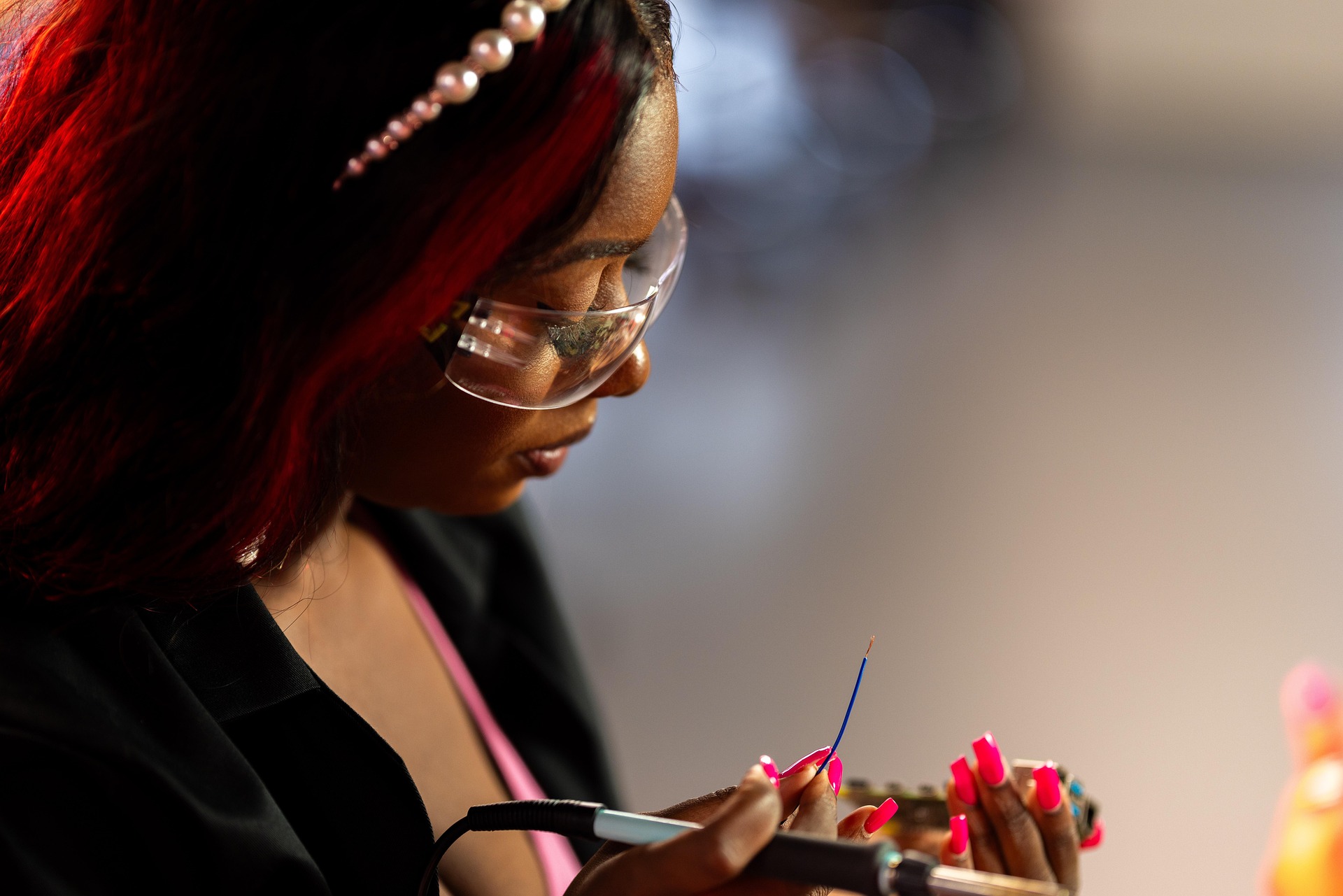
Women remain underrepresented in the U.S. tech workforce, though there are signs of gradual progress. Overall, women hold only about 26–27% of technical jobs in the United States—far below their 47% share of the overall labor force. At leading tech companies, female employees comprise roughly 33% of the total workforce on average, but women are concentrated in non-technical roles; none of the Big Five tech companies report women as more than a quarter of their core technical staff. This comprehensive analysis examines the current state of women's representation across technical roles, leadership positions, venture capital funding, and sector-specific trends as we enter 2026.
Representation in Technical Roles: Startups vs. Large Companies
Women's representation in the workforce, leadership, and technical roles at major U.S. tech companies reveals a persistent gender gap. Female representation in core technical roles is consistently below 25%. At leading tech companies, female employees comprise roughly 33% of the total workforce on average, ranging from 29% at Microsoft to 45% at Amazon. However, women are concentrated in non-technical roles; none of the Big Five tech companies (Amazon, Apple, Google, Meta, Microsoft) report women as more than a quarter of their core technical staff.
Female Representation in Big Tech Companies
For example, at Google women are ~33% of all employees but just 25% of tech job holders, and this pattern is echoed across peers. As a result, the tech industry remains far from gender parity entering 2025, despite companies' diversity pledges.
In the startup ecosystem, the gender gap is similarly pronounced. Women founders represent only about 15% of tech startup founders globally (just one in six). Even counting companies with mixed-gender founding teams, just ~31% of startups worldwide had at least one female founder as of 2022. U.S.-specific figures are comparable – North America's proportion of female startup founders is around 16%. This imbalance in entrepreneurship means women-led startups are rarer and often smaller in scale.
Women are also underrepresented across startup workforces and technical teams, though detailed data is sparse. One analysis found nearly 46% of U.S. data scientists and analysts are women – the highest share of any tech role – yet most technical roles at startups (e.g. engineers) are heavily male-dominated. In short, whether at a 10-person startup or a Fortune 500 tech giant, women occupy a minority of technical positions – highlighting the persistent gender gap at both ends of the industry.
Women in Leadership and Executive Roles
Women's presence in leadership positions in tech remains disproportionately low. An estimated 10–11% of executive or senior management roles in the tech industry are held by women. As of 2025, only about 17% of tech CEOs globally are female, and the share of female CTOs is even lower at roughly 8%. Notably, none of the U.S. "Big Five" tech giants (Amazon, Apple, Google, Meta, Microsoft) has ever had a female chief executive.
Women in Tech Leadership Roles (2015-2023)
In the broader corporate landscape, women's representation at the very top is inching upward but remains small: 44 women now lead Fortune 500 companies (8.8% of all Fortune 500 CEOs). Within tech firms, women often occupy slightly more of the C-suite than the CEO tally alone implies – about 25% of C-level executives in the U.S. are women – but women of color hold only around 5% of those roles.
The leadership pipeline for women in tech shows both barriers and slow improvement. Women have made gains in middle management in recent years, yet a "broken rung" still impedes advancement. For every 100 men who are promoted to first-level manager, only 87 women are promoted – and for women of color this drops to 82.
Promotion Gap: For Every 100 Men Promoted
This leadership gap compounds at higher levels; one survey found 53% of women in tech feel it is harder for women to secure senior promotions compared to men. Consequently, women remain a small minority of top technologists – for example, women held only 14% of global tech leadership roles in 2023 (up from 8% in 2015, but unchanged from 2022).
On a positive note, interest in leadership is high among women in tech: 85% say that seeing strong female leadership in a company makes them more likely to join, and a similar 85% of women technologists report aspiring to advance into executive leadership during their careers. These figures suggest that bolstering mentorship, promotion opportunities, and representation at the top could help sustain the momentum of women rising into leadership. As companies prepare for 2026, many are prioritizing this issue – 76% of employers now say women are a top priority group in their DEI initiatives, aiming to cultivate the next generation of female tech leaders.
Venture Capital and Startup Funding Trends for Women-Led Companies
Venture funding for women-led startups continues to lag dramatically, showing little improvement even in 2025. In the United States, startups founded exclusively by women received only about 2.0% of all venture capital in 2023 – essentially unchanged from the ~2.1% share in 2022 and roughly on par with the average over the past decade. For context, all-male founding teams consistently attract ~84–85% of U.S. VC funding, with the remainder going to mixed-gender teams.
Venture Capital Funding Allocation (2024)
Globally, the picture is similar: of the $289 billion in venture capital invested worldwide in 2024, only 2.3% went to female-only founding teams (about $6.7B), versus 14.1% to mixed-gender teams and 83.6% to male-only teams. This represents a slight uptick from 2023, when female-only teams had 2.1%, but the change is minuscule. At the current glacial pace, analysts estimate it would take until 2065 to reach gender parity in venture funding allocation.
Not only do female founders raise a tiny slice of capital, but they also tend to secure smaller deal sizes. In 2024, companies founded by women represented about 6.4% of venture deals globally, yet those deals accounted for just ~2.3% of capital – meaning the average deal size for female-only founders was less than half that of male-only founders (around $5.2M vs. $11.7M). Later-stage funding is especially scarce: women-led teams received only ~1.8% of Series C or later funding, indicating that the gap widens as startups grow.
There is one encouraging trend – the number of deals going to women-founded companies has been growing (in the U.S., the share of venture deals involving exclusively female founders rose from 3.8% in 2008 to about 5.4% by 2024). However, these startups still struggle to attract equal capital. Structural factors play a role: women entrepreneurs are more often concentrated in industries that receive lower valuations and investment (such as health, education, retail), whereas capital-rich sectors like AI, enterprise software, and cybersecurity have fewer female founders. Additionally, the venture industry itself remains male-dominated – only ~15% of VC partners are women – which can reinforce bias in investment decisions.
Other startup metrics underscore the challenges facing women entrepreneurs. Only 25% of startups worldwide are founded by women (as a solo or co-founder) according to one analysis, and just 37% of startup boards include even one woman. Female founders also often face disparate questioning by investors – they are asked more often about risks and family plans rather than growth projections – which can hamper fundraising. On the upside, funds led by female investors are more likely to back women-led companies, and the share of women in junior investing roles is rising (now one-third of junior VC professionals). Several organizations (All Raise, Female Founders Fund, etc.) and government initiatives are aiming to channel more capital to underrepresented founders.
Looking ahead to 2026, the consensus is that meaningful change will require sustained effort: while the overall venture market may rebound, it will take concerted action to ensure women-led startups share in the growth. Absent such efforts, women's share of VC funding is expected to remain stuck in the low single digits in the near term – a stubborn statistic that represents not only an equity gap but a missed economic opportunity estimated in the trillions.
Sector-Specific Data: AI, Cybersecurity, Software Engineering, and More
Gender representation in tech varies widely by sector and role, with some fields seeing modest progress while others remain starkly imbalanced. In cutting-edge domains like artificial intelligence and cybersecurity, women's representation remains low but has been improving. Globally, women hold roughly 26% of jobs in artificial intelligence (AI) and machine learning – meaning about one in four AI professionals is female. This share is up from previous years but still under one-third, a concern given the influence of AI and the risk of biased outcomes if the field remains male-dominated.
Female Representation by Tech Sector
In cybersecurity, women now make up approximately 24% of the worldwide cyber workforce, a significant rise from just 11% in 2017. The U.S. lags slightly with women holding under 20% of cybersecurity jobs nationally. Still, this sector's trajectory is positive: industry forecasts predict women could reach about 30% of the global cybersecurity workforce by 2025 (and around 35% by 2030) if current trends continue. Cybersecurity has seen intensive efforts (scholarships, mentorships, etc.) to draw more women into the field, which are starting to pay off in shrinking the gender gap.
Traditional software engineering and IT roles, however, remain male-heavy. In the United States, only about 20% of software developers are women. Likewise, women comprise just 18.9% of information security analysts (a proxy for cybersecurity roles in the U.S.) and around 7% of network architects – one of the most male-dominated tech occupations.
On the other hand, certain subfields approach parity: for example, nearly 49% of web developers and digital interface designers are female, and women are relatively well-represented in data and analytical roles. In fact, a recent survey found that 46% of U.S. data scientists and analysts are women, the highest female share of any tech job category. This suggests that women have made stronger inroads into data analytics and product design roles, while core engineering and architecture positions remain challenging areas.
The data underscore that women's participation varies by role – from nearly half of web design roles to under one-fifth of software and security engineering roles. Importantly, even in areas where women have gained footholds (e.g. data analysis), they often remain underrepresented at senior levels or in more technical specializations (for instance, women are only ~12% of advanced data science roles globally). In hardware and engineering-intensive sectors the gap is especially large; for example, women hold under 15% of roles in cloud computing worldwide.
Industry by industry, similar patterns emerge: a 2022 survey found women occupied about 25% of technical roles at top Silicon Valley companies like Google, Apple, and Meta, whereas sectors like health-tech and ed-tech tend to have higher female founder rates and workforce representation. As the tech landscape evolves, fields like AI and machine learning are drawing significant attention – yet less than one-third of AI professionals are female, pointing to a need for proactive inclusion as these sectors grow. In summary, the sectoral breakdown reveals that the "women in tech" challenge is not monolithic; it ranges from near-equity in certain data and design roles to severe underrepresentation in others. Tailored strategies will be required to address the unique barriers in each domain as we head into 2026.
Hiring, Retention, and Promotion Rates for Women in Tech
Beyond representation numbers, the hiring, retention, and advancement experiences of women in tech shed light on why gaps persist – and how they might be closing (or widening). On the hiring front, many companies acknowledge ongoing bias. Nearly 65% of tech recruiters surveyed admitted there is bias in their hiring processes, which can disadvantage female candidates. Women job seekers also report skewed ratios in the workplace: 46% of women in tech say they are outnumbered by men 4-to-1 or more on their teams, while only 15% work in gender-balanced teams.
The good news is that companies appear to be making concerted efforts to recruit more women – 85% of cybersecurity teams hired at least one woman in the past year, and employers report it is becoming easier to find qualified women for tech roles (the share of organizations struggling to find female cyber candidates fell from 41% to 22% in one year). Additionally, flexible work policies are helping: 53% of women say that remote/work-from-home options have enabled them to enter or stay in tech roles they otherwise might have left. Heading into 2026, hiring pipelines for women are expected to continue improving gradually as diversity recruitment and STEM education initiatives expand.
Indeed, the talent pool itself is growing slowly more diverse – women now earn about 21% of U.S. computer science degrees (up from a low in the 2000s, though still far below 37% in the mid-1980s) – which should translate to more female tech hires in coming years.
Retention remains a serious challenge. Women in tech are significantly more likely to leave the industry compared to their male counterparts. Studies show women technologists are about 45% more likely to quit their tech jobs than men. By age 35, approximately half of all women who started in tech have left the field, a striking statistic often attributed to a combination of workplace culture, slower advancement, and personal factors.
In fact, when women exit tech roles, they commonly cite factors like a toxic company culture (37% of women leavers cited this), limited growth opportunities (28%), and challenges balancing family responsibilities (27%) as primary reasons. The net effect is what's been called a "leaky pipeline" – even as more women enter tech, too many are dropping out mid-career. One projection warned that over 56% of women in tech today will leave the field before reaching senior stages of their careers if current trends hold.
Recent turmoil in the tech industry may have exacerbated this: during the 2022–2023 wave of tech layoffs, women were disproportionately affected (women were 65% more likely than men to lose their jobs in those layoffs, according to one study, and an internal analysis by WomenTech Network found nearly 69% of laid-off tech employees were female). Such setbacks risk undoing some of the diversity gains if companies do not respond proactively.
The promotion gap also contributes to lower retention. As noted, women are promoted at lower rates in early career, which funnels fewer into leadership later on. This "promotion penalty" can be discouraging – it's no surprise that 43% of women in tech report considering quitting at least once a week. Moreover, burnout is far more prevalent among women technologists: 57% of women in tech say they feel burned out at work, compared to 36% of men. Factors like unequal household burdens (exacerbated during the pandemic) and the pressure of being underrepresented at work contribute to this burnout gap.
Yet, despite the challenges, there is optimism to be found in women's tenacity and what could happen if conditions improve. An astonishing 9 in 10 women who have left tech say they would consider returning to the industry if workplaces made tangible improvements in culture, growth opportunities, and flexibility. This represents a huge opportunity for companies to win back experienced female talent by addressing the issues that pushed them out.
In response, many tech employers are focusing on inclusive culture and career development as retention strategies. Initiatives such as mentorship programs, employee resource groups, and clearer advancement paths are being expanded. Notably, companies with more women in leadership tend to foster environments that retain women – for example, a survey found 92% of women in tech report improved workplace experiences at companies emphasizing equity and inclusion. Strong female leadership itself is a retaining factor: when women see other women in senior roles, it signals opportunity (one study showed 85% of women are more likely to stay at a company with women well-represented in leadership).
Heading into 2026, experts predict that organizations which actively support work–life balance, enforce anti-harassment policies, and provide mentorship/sponsorship for women will not only retain more female employees but also outperform peers (research correlates higher gender diversity with better problem-solving and innovation). In summary, while the hiring outlook for women in tech is slowly brightening, the retention and promotion issues remain key pressure points. Addressing these will be crucial to turning today's positive intent into lasting gender parity in tech. Companies that rise to the challenge could see more women not only join their ranks but thrive and stay through 2026 and beyond – creating a virtuous cycle of representation driving further representation.
Meet Our Mentors
Experienced tech leaders who can help you navigate your career and break through barriers.

Mikhail Dorokhovich
Full-Stack Development, System Architecture, AI Integration
Founder of mentors.coach. Full-stack engineer with 9+ years of experience building scalable platforms, mentoring teams, and shaping modern engineering culture. Passionate about mentorship, craftsmanship, and helping developers grow through real projects.
LinkedIn profile
Gaberial Sofie
Talent Development, Team Culture, HR Strategy
Co-founder and people-focused HR professional with a background in organizational psychology. Dedicated to building compassionate, high-performing teams where mentorship and growth come first.

George Igolkin
Smart Contracts, DeFi, Web3 Infrastructure
Blockchain engineer passionate about decentralized systems and secure financial protocols. Works on bridging traditional backend systems with modern blockchain architectures.

Valeriia Rotkina
Human Resources, Learning Programs, Career Education
HR specialist and educator with a focus on personal development and emotional intelligence. Helps professionals find clarity in their career path through structured reflection and goal-setting.

Kristina Akimova
Recruitment, Employer Branding, Team Well-Being
HR partner dedicated to fostering healthy team dynamics and building inclusive hiring processes. Experienced in talent acquisition and communication strategy for growing tech companies.
Ready to Advance Your Tech Career?
Get personalized guidance from experienced mentors who understand the challenges facing women in tech.
Break through barriers and build a thriving tech career.